


Today is a Saturday afternoon, one I have come to look forward to every month for the last 2 years.
It is the day of the monthly baithak at Adi’s sitar learners’ community. A small, almost unassuming gathering of budding sitarists, musicians, aficionados, and a few like me, who come to listen. In that space, I am not performing or analysing, just present, learning in ways that do not always announce themselves.
I walked in today, and the setup was getting ready. Sir’s living room is transforming into an event venue. A lush carpet strewn across the floor, waiting to become a stage. The floor is being cleaned so that the audience can take their seats. Microphones are being positioned carefully, attempting to catch the detail of every note. The electronic tanpura hums softly from an iPad, its steady tone blending into the room. Adi is bent over his mixer, adjusting the tabla, turning tiny knobs until everything settles just right. I find myself a spot from where I can capture moments of today’s gathering in video and photos.
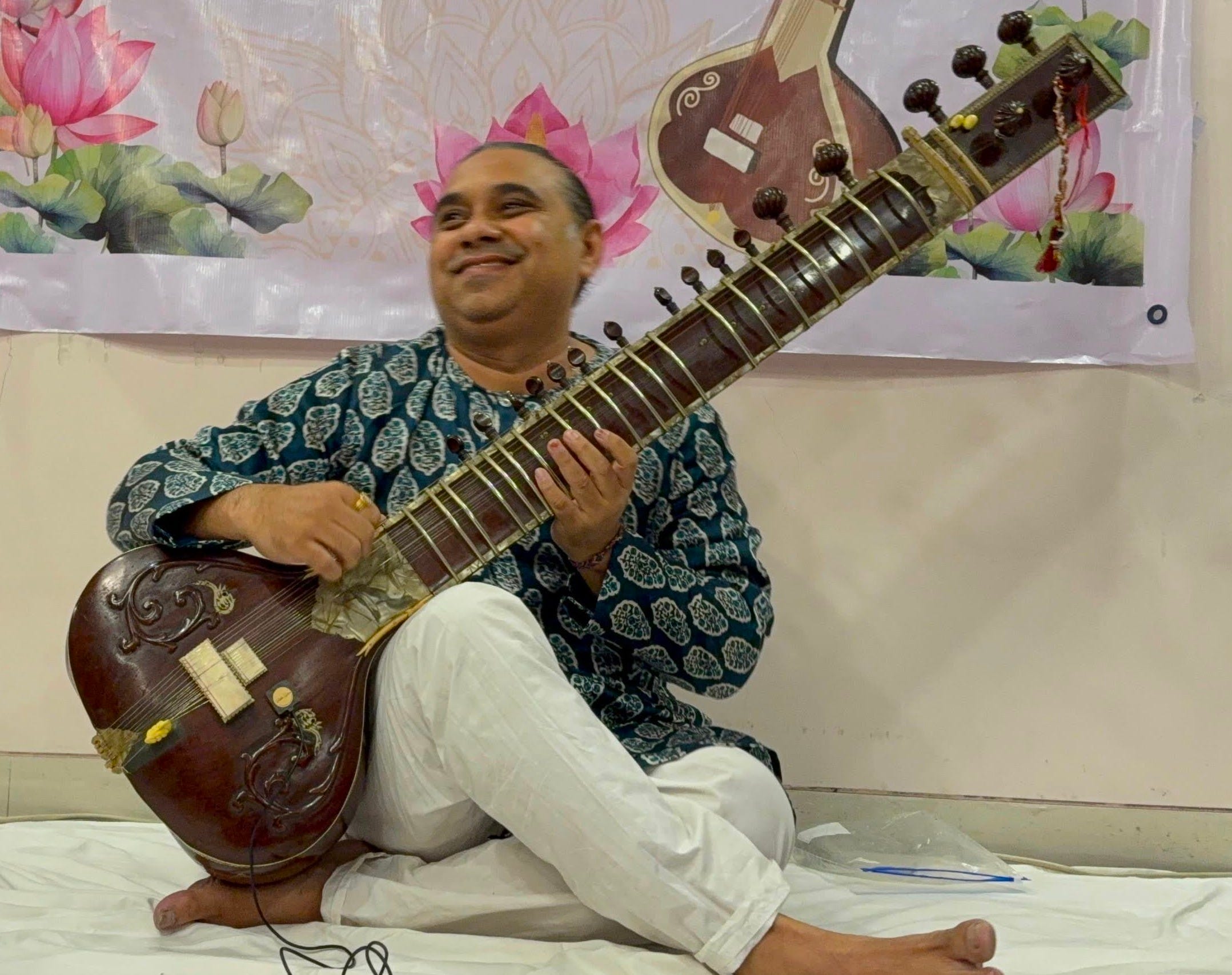
There is something about this space that resembles an event I get to attend. And yet these baithaks are not quite that. They are quieter, more honest. A space for students to present what they have learnt and practiced, because at some point, practice must leave the safety of repetition and aspire to become a performance.
As Adi takes the stage, he adjusts the frequency of the strings to Raga Jog Kauns, he nods to the percussionist, and begins his Alaap. The alaap unfolded slowly, almost like the room was being tuned along with the instrument. There was no rush, just a careful, deliberate exploration of each note, letting it settle before moving forward.
As the jod emerged, there was a quiet shift. The structure began to take form, the rhythm finding its way in, almost like a conversation gathering momentum. And then, somewhere along the way, came the taans. Quick, intricate, demanding, complex.
It was in one of those moments that it happened. You can see it happen in an instant. A slight hesitation, the mind catching up with the hand, and for a brief moment, the slip of the note feels louder than the music itself.
But what stayed with me is not the slip; it is what follows.
A brief falter, and then a return. Almost as if nothing happened. Not because it didn’t matter, but because he chose not to stay there.
There is a quiet kind of forgiveness in that moment, not the kind we speak about, but the kind we practice without naming. An acceptance that something went off, and it does not get to decide what comes next.
Sitting here now this evening, it begins to feel like this isn’t just about music at all.
The act of accepting a mistake does something to you. It steadies you. There is no scrambling to cover it up, no energy spent pretending it didn’t happen, no quiet panic trying to preserve an image. Just a simple acknowledgement and a return.
And in that return, there is power.
Because when you can meet yourself in that moment without turning away, you become harder to shake. There is less for the world to use against you when you are not hiding from yourself. You are not waiting to be exposed; you have already seen it.
Perhaps that is where humility comes from. Not from thinking less of yourself, but from seeing yourself clearly and being at ease with what you see.
It also makes you wonder how early we are taught something very different.
To avoid mistakes. To get it right. To not fail.
As children, so much of what we hear is caution. Don’t do this. Thats not how to do it. Don’t embarrass yourself. And slowly, without anyone intending harm, mistakes stop feeling like a part of learning and begin to feel like something to avoid altogether. A child hesitates, not because they cannot learn, but because they are unsure if they are allowed to.
Fear quietly replaces curiosity.
But sitting in that room, watching those performances, it feels unmistakably clear that learning has never existed without the possibility of getting it wrong. In fact, it depends on it. To know what not to do is often as important as knowing what to do.
And this is where teaching, in its truest sense, reveals itself. Not in how much we instruct, but in how we respond when something goes wrong. Because in that moment, we are not just correcting an action, we are shaping a person’s relationship with failure.
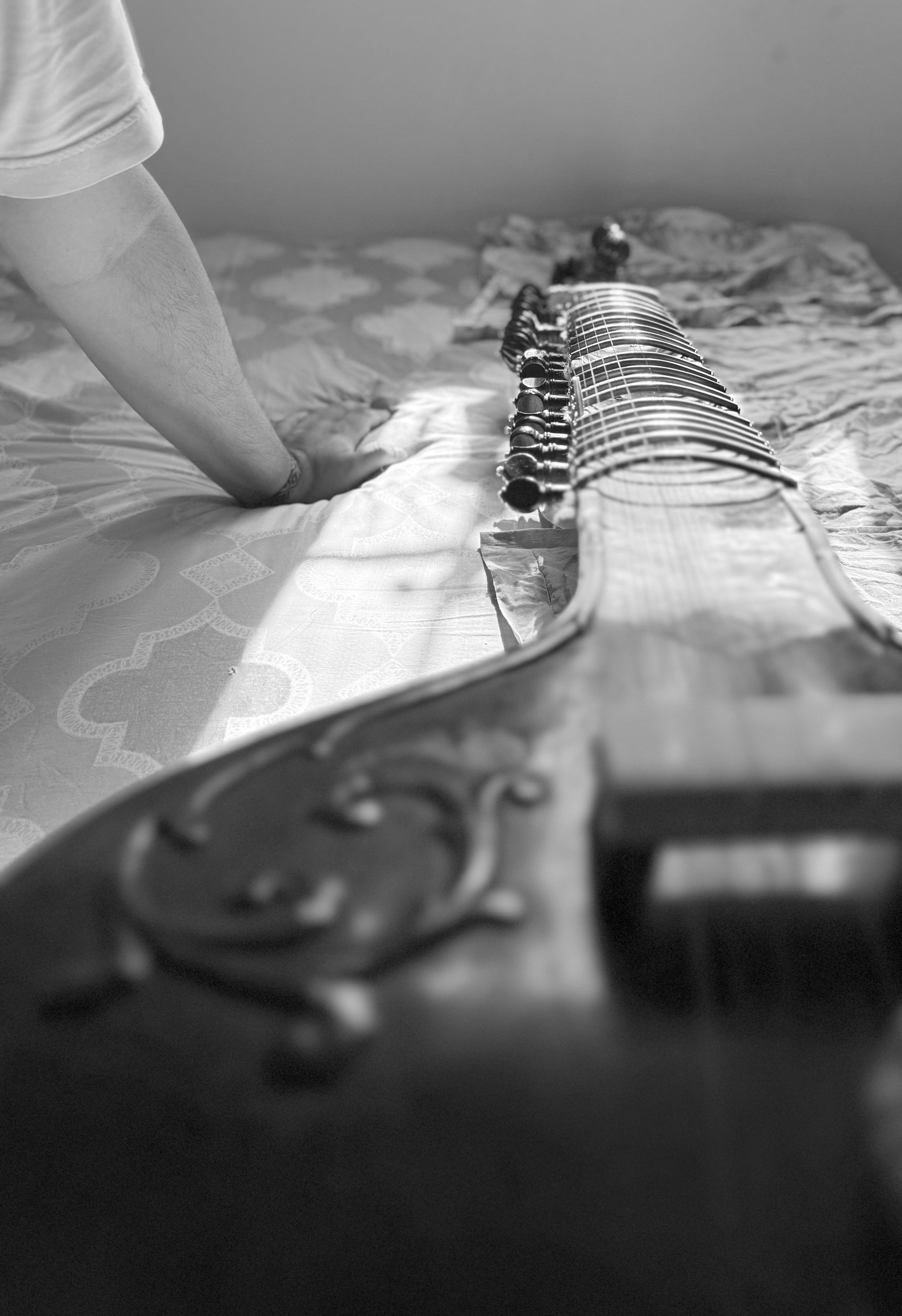
To correct without instilling fear, to guide without taking away dignity, to allow someone to stumble without making them feel like the fall defines them. Because the way we are held in our mistakes becomes the way we learn to hold ourselves.
When that space is given, something powerful begins to take root. A quiet strength.
The ability to take risks without the constant fear of failing. The ability to try, even when the outcome is uncertain, because somewhere along the way we learnt that if things fall apart, we can still return. We can recover.
And that changes how we move through the world. Risk begins to feel like a possibility instead of a danger. Confidence is no longer loud or performative; it is simply the willingness to engage, even when things may not go as planned.
Over time, that willingness shapes something deeper than skill. It shapes who we become. Our choices, our voice, our sense of self. All of it, quietly, begins with acceptance.
And in that sense, it almost doesn’t matter whether you are a world leader or a budding artist. The stage may change, the stakes may rise, but the moment remains the same.
A slip. A pause. A choice.
To stay there, or to return.
And maybe that is what stayed with me from that afternoon. Not the perfection of the performance, not the notes that landed exactly where they were meant to, but that one brief moment.
The slip.
The pause.
And the quiet decision… to continue.
Learning.
I can so resonate with every word you wrote... As always, love the way see things and the way you weave words to present thoughts with such clarity. Keep writing! Lots of love.