


Early Saturday morning, our gardener arrived carrying two small succulent saplings. I placed them on the balcony and settled them gently into their new pots. As I watered them, the television murmured in the background. The news was anything but quiet. It had been a week since tensions between the United States, Israel, and Iran had escalated, and there seemed to be no easy path toward resolution.
The contrast felt strange. A small act of planting life on my balcony, while somewhere far away, the world seemed to accept war as another ordinary headline.
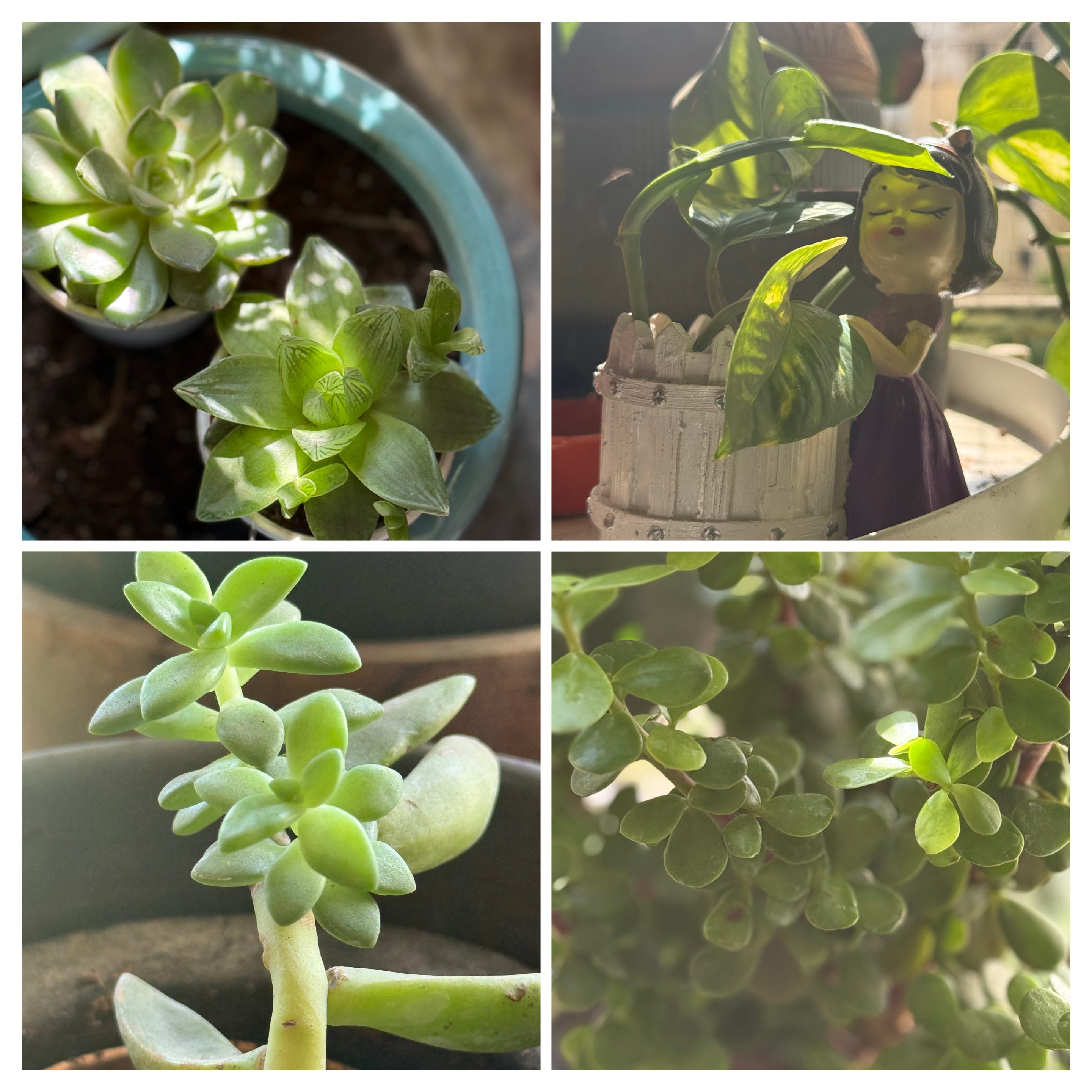
As I looked at the plants, a quiet metaphor came to mind. Our generation has grown up to become like succulents. Plants that survive harsh climates adapt quietly. They store what they can. They endure long dry spells. They adjust to change without protest.
Perhaps that is what the last twenty-five years have done to us.
Growing Up in Crisis
For many of us millennials, adulthood began in a world already shaped by crisis. The century opened with the shock of the September 11 Attacks. The images from that day reshaped global politics and placed terrorism at the centre of international security. Soon after came the Iraq War, raising difficult questions about how quickly diplomacy could give way to force.
Before the world could absorb those consequences, another shock arrived. The Global Financial Crisis shook economies across continents. Markets collapsed. Jobs disappeared. Stability suddenly felt fragile.
My niece Treesha belongs to Gen Z. She stepped into adulthood during the COVID-19 Pandemic. Her generation entered adulthood at a moment when the entire planet paused together. Cities fell silent. Flights stopped. Schools closed. Fear travelled faster than the virus itself.
Yet there was something unusual about that moment. The enemy was common. A virus. Not a nation. Not an ideology. Not another person.
Hospitals replaced trenches. Scientists became generals. Vaccines became the ammunition. Borders closed. Economies halted. Millions across continents came together to fight an enemy that could not even be seen with the naked eye.
For a brief moment, humanity remembered what collective action could look like.
My generation learned resilience through uncertainty. Treesha’s generation seems to value empathy, mental well-being, and cooperation across borders. Our priorities may look different. Yet both generations carry a quiet hope for a more humane world.
The Return of an Older Script
But in recent years, the world has quietly returned to an older script. Conflicts in Ukraine and Gaza dominate global headlines. Tensions simmer across the Middle East. Diplomacy struggles to keep pace with escalating hostility. In its place, we hear the language of deterrence, retaliation, and military readiness.
At the same time, technology moves forward at an astonishing speed. Artificial intelligence evolves rapidly. Large language models reshape industries. Digital systems reorganize economies.
The contrast is striking. In the digital world, progress feels relentless. In the physical world, conflict feels stubbornly unchanged.
It raises an uncomfortable question. After centuries of war, two world wars, and even a shared battle against a pandemic, did humanity truly learn how to avoid conflict with itself?
When Technology Promised Something Else
When I stepped into adulthood in the early years of this century, I felt quietly armed with possibility. A cell phone in my hand. A laptop on my desk. The internet is unfolding around us like an endless library.
Technology seemed destined to reshape economies and solve problems that earlier generations had struggled with. Knowledge could move freely across borders. Collaboration could happen across continents. It felt possible that shared information might make the world more cooperative.
Yet somewhere along the way, the promise of technology outpaced the evolution of our politics. Military strength still defines influence. Nations compete fiercely for control over artificial intelligence, data, and digital infrastructure. The tools that once promised connection now deepen rivalry between states.
A Different Way of Thinking About War
Drawn by that thought, I walked toward the book cabinet in the living room. On one shelf sat George Orwell’s 1984. Right beside it rested a worn copy of Snippets from the Gita. The contrast felt almost deliberate. One book imagined a world shaped by power and control. The other reflected on duty, responsibility, and moral balance.
Standing there, I wondered how differently civilizations have tried to understand war.

The philosophy of the Gita approaches war through a moral lens. It does not celebrate violence. Instead, it asks when the use of force becomes morally unavoidable. The Gita frames war through the idea of dharma. The responsibility to uphold justice and protect the moral order of society. Violence is never presented as the first option. It emerges only when injustice persists, and every effort to restore balance fails.
The text also insists on restraint. The purpose of war is not conquest or revenge. It is the restoration of fairness and the protection of the innocent. In that sense, the Gita views war not as triumph but as a burden. A difficult duty is carried out only when all other paths have been exhausted.
Gandhiji drew from these traditions in his own way. He emphasised moral courage as a lesson of the Gita that was necessary in confronting injustice while exercising restraint. His philosophy acknowledged the complexity of human choices. Perhaps that is why our generation sometimes feels strangely numb to conflict. Crisis has become a familiar climate. News cycles move quickly from one war to another. Outrage fades faster than it once did.
Like the succulents on my balcony, we have learned to survive difficult climates. But survival alone cannot be the ambition of civilization.
A Quiet Hope
Later that morning, I stepped back onto the window to check on the tiny succulents. The soil was still damp from watering. The plants sat quietly in their pots, storing what they needed for harsher days.
Watching them, I wondered whether humanity, too, can learn how to endure difficult seasons without destroying the common fabric that sustains us.