


It was a Sunday morning, and I was sitting with my coffee, scrolling through Instagram, while Asha Bhosle was singing somewhere in the background. I was not really listening. The song was simply part of the morning, one of those old songs that seem to float around the house without demanding your attention. And then I came across an article in the Washington Post, “For feminists, the deaths of Parton and Steinem days apart deliver a double dose of grief.”
I stopped scrolling and moved to the article.
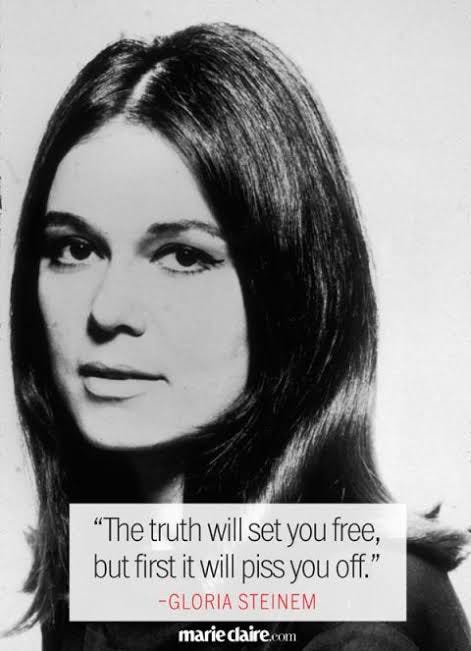
It has been a few weeks since Instagram was abuzz with quotes and photographs of both Gloria and Dolly, but this was one of the first long reads I came across. What struck me was the pairing. Gloria and Dolly have lived such different lives, and yet there was something similar in what they represented. Gloria challenged the structures that told women what they could and could not be. Dolly seemed to take everything that made her unmistakably Dolly and say, “This is who I am, and I am going to own every bit of it.” One fought for women to have greater freedom to define their lives; the other showed what it could look like when a woman defined herself on her own terms. They represented feminism in very different ways, but both seemed to know exactly who they were.
I first encountered Gloria Steinem in 2019, during my Postgraduate Certificate Course in Public Policy from the Takshila Institution, while working on an assignment. Somewhere in that research, Gloria Steinem emerged on my radar. Years later, she appeared again during my immersion week at the ILSS Emerging Women’s Leadership programme. And now, years later, sitting with my coffee, she was appearing in my life for a third time.
Only this time, she was gone.
The article made me think about how much of what women take for granted today was once something women had to fight for. The right to participate in public life, to make decisions about our own bodies, to be taken seriously, to have financial independence. I can use a credit card without thinking about the history behind that little piece of plastic. In the United States, the Equal Credit Opportunity Act of 1974 made it unlawful for creditors to discriminate based on sex or marital status. Something as mundane as obtaining credit in your own name was once part of a much bigger fight for financial independence.
I sometimes wonder how many such freedoms have become invisible to us because we inherited them rather than fought for them.
And then there was Dolly!
She once said, “Find out who you are and do it on purpose.”
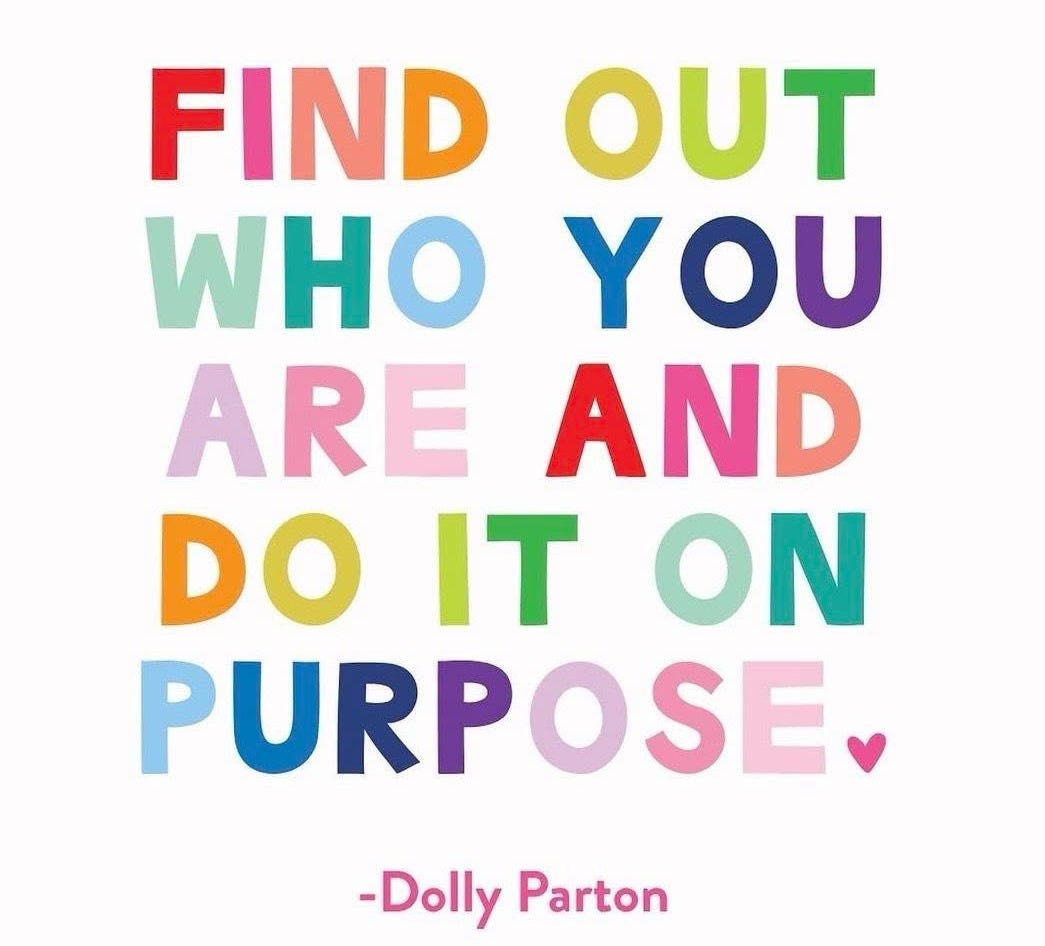
Oh! The simplicity of that sentence!
How often do we actually get around to finding out who we are when we are so busy being what everyone else needs us to be? We are daughters, sisters, wives, mothers, caregivers, professionals, friends. And each role comes with its own adjective. An obedient daughter. A responsible sister. A caring mother. A dutiful wife. A supportive partner. A successful professional.
There is nothing wrong with any of these. In fact, many of them are beautiful relationships. But somewhere between becoming everything everyone else needs us to be, I wonder how often a woman gets to ask herself a much simpler question.
Who am I when nobody needs anything from me?
I caught myself staring at the window and came back to my coffee and Instagram, when a post from the Jane Goodall Foundation sent me down another rabbit hole. October 1, 2026, will mark a year since Jane Goodall passed away.
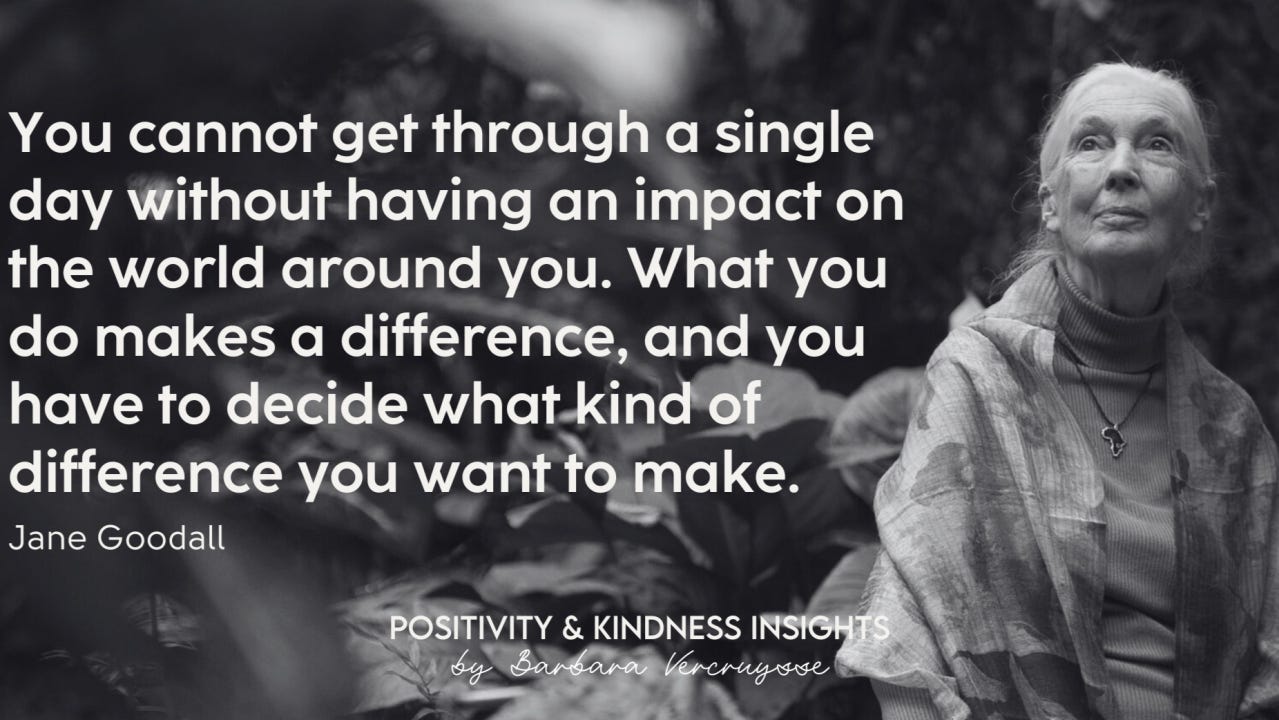
Jane went into the forests of Gombe because she was fascinated by chimpanzees. That curiosity became research, the research became conservation, conservation became advocacy, and advocacy became education. She kept widening the circle of what she cared about and kept showing up for it, for decades.
What stays with me about Jane is not just the work she did, but how consistently she stayed with it. She found something that mattered to her, and she did it. Not because it was fashionable or because somebody had prescribed it, but because somewhere along the way she discovered something she cared deeply about. And once she found it, she stayed with it.
Maybe this is what Dolly meant when she said, find out who you are and do it on purpose.
As I took another sip of my coffee, Asha was singing, “Jeene wale soch le, yahi waqt hai, kar le puri aarzoo!”
I smiled; it felt as though the universe was conspiring to make me look at how my world has been shaped by all these women.
Asha Bhosle’s life was fascinating. The voice to so many pretty faces. She absorbed influences from the world and brought them into her singing. I simply love the fact that she experimented with Western sounds, collaborated with musicians and artists across genres and generations, adapted to changing times, and continually reinvented her music. In the early days of MTV India, she was among the playback singers of her generation to break tradition by appearing in 1990s Indipop music videos and winning an MTV Award.
Yet she never seemed to need to become someone else to become modern. She could change without becoming unrecognisable to herself. Perhaps that is what makes her so interesting to me.
We often confuse finding ourselves with finding one fixed version of ourselves and refusing to change. Asha did the opposite. She changed constantly. She experimented, listened, practised, did her riyaaz, collaborated, and kept learning. And somehow, through all that evolution, she remained unmistakably Asha.
I remember reading about her views on Western music and how she felt that we often look at the West as progressive while failing to recognise the richness of our own musical traditions. And yet here was Asha herself embracing modern sounds, experimenting with Western influences and collaborating with international artists.
There was no contradiction in that. She didn’t have to reject the world to remain rooted in herself. She could take what she liked, learn from it, make it her own, and remain connected to where she came from.
As the song ended, my phone rang.
It was my brother.
In about a week, it would be a year since Aai passed. We discussed a few things that needed to be done for the first annual Shraddh ceremony, and I hung up.
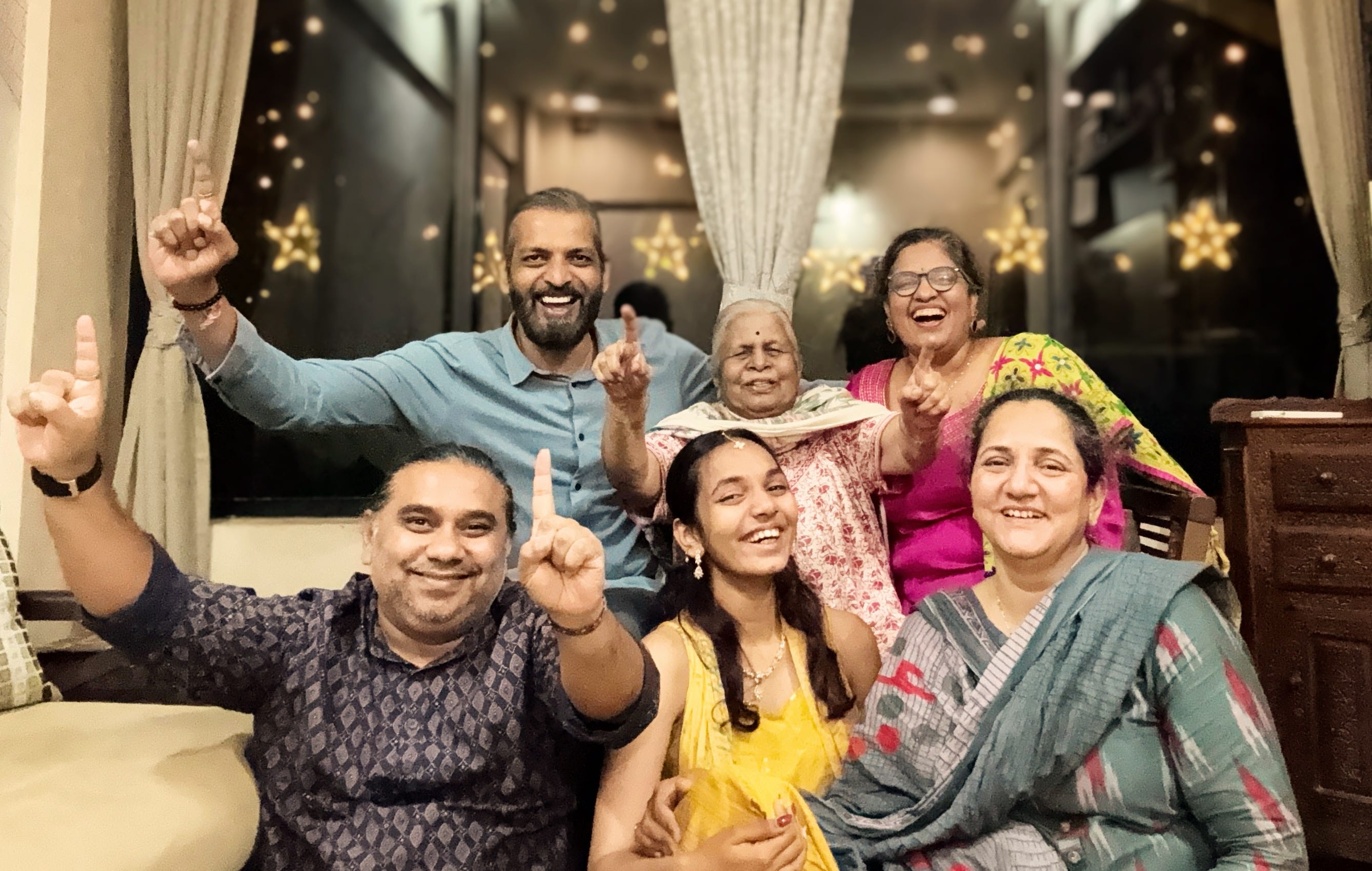
That’s when it hit me like a jolt.
I had made it one year without her.
Till last year, a typical Sunday morning would mean a phone call from her. A ritual she kept up with her regulars. For years, my brother, my uncles, and a few of her close friends were used to receiving that Sunday call.
The first few Sundays after she died felt weird. It took me some time to realise what I was missing.
Just a few minutes back, I was in the world of women who stood for something, and now among them I saw my own.
Iron Lady. My Aai.
After losing her own mother to cancer, she chose to pursue nursing. She left home, enrolled in nursing, and that’s where she met my father, who was pursuing his MBBS. Theirs felt like a love story out of the movies. Despite opposition from their parents, with support from friends, they got married, had two sons, and moved to Mumbai. While Baba rose in the ranks to become the Head of the Department of Radiology at JJ, she became a homemaker.
And one day, Baba was gone.
Aai was left with three kids, no home, no savings, and a future she didn’t plan for. That’s when, against all odds, she donned her nursing cap. After a gap of two decades, she came back to the very profession she had once turned her back on. Nine years later, she retired with great pride as Staff Mulajkar.
I remember her farewell. It was so grand. All her co-workers had such lovely things to say. I felt so proud of her, for everything she did, against all odds, so that her family had a home to live in and her children could complete their studies.
From the salt in her sadha varan to the ironing of her uniform white saree, she was very particular. It mattered to her. She cared about people, sometimes to the extent that it would be annoying to the people themselves.
Mostly me!
Almost religiously, she would call me and give me a time check at work, enquiring if I had left for home. Even my colleagues knew that if I stepped out of any meeting at 7 pm, it would be for an Aai call. My brother’s time check was 11 pm, but the concern was the same.
I don’t think she ever expected me to be a MasterChef in the kitchen, but she definitely pushed me to learn to cook a few things that I liked, just the way she made them. Top among them were Chhole Bhature and Aloo Parathas. There would always be a race as to who gets the last one.
She held my back when I chose to study abroad, sharing that risk with me. She loved the boy I chose as my life partner. In her last years, her memory was fading, but if there is one thing she remembered eternally, it is to forgive. More than anything, I wish to carry this ability within me, with as much grace as Aai. I probably don’t even recognise yet the many other ways I carry her. In the things she taught me deliberately and the things she taught me simply by being herself.
I had started the morning thinking about women finding themselves outside the roles the world gives them. But Aai made me wonder whether it is always about stepping outside those roles at all. Maybe sometimes it is about making those roles your own. Sometimes this is the legacy that women leave behind. Not always movements or songs or books or institutions. Sometimes they leave behind pieces of themselves in the people who loved them.