


I watched Disclosure Day recently. After the movie was over, on the drive home, my brother asked me something that seemed completely unrelated to the film itself. Almost in passing, he said, “Why do we always fear aliens?”
It’s been a couple of days since that conversation, and somehow that one question has refused to leave me. I’ve replayed it in my head more times than I care to admit. Why do we? Of all the possibilities our imagination offers us when we think about intelligent life beyond Earth, why is fear almost always the first one to arrive?
The more I thought about it, the stranger it seemed. We’ve never met an alien. We’ve never had a conversation with one, never exchanged ideas, never shared a meal, never even conclusively established that intelligent life exists beyond our tiny planet. And yet, almost every story we tell ourselves begins with invasion, conflict and survival. Before we’ve learnt a single thing about them, we’ve already decided that we need to defend ourselves. It made me wonder whether our imagination says far more about us than it ever could about aliens.
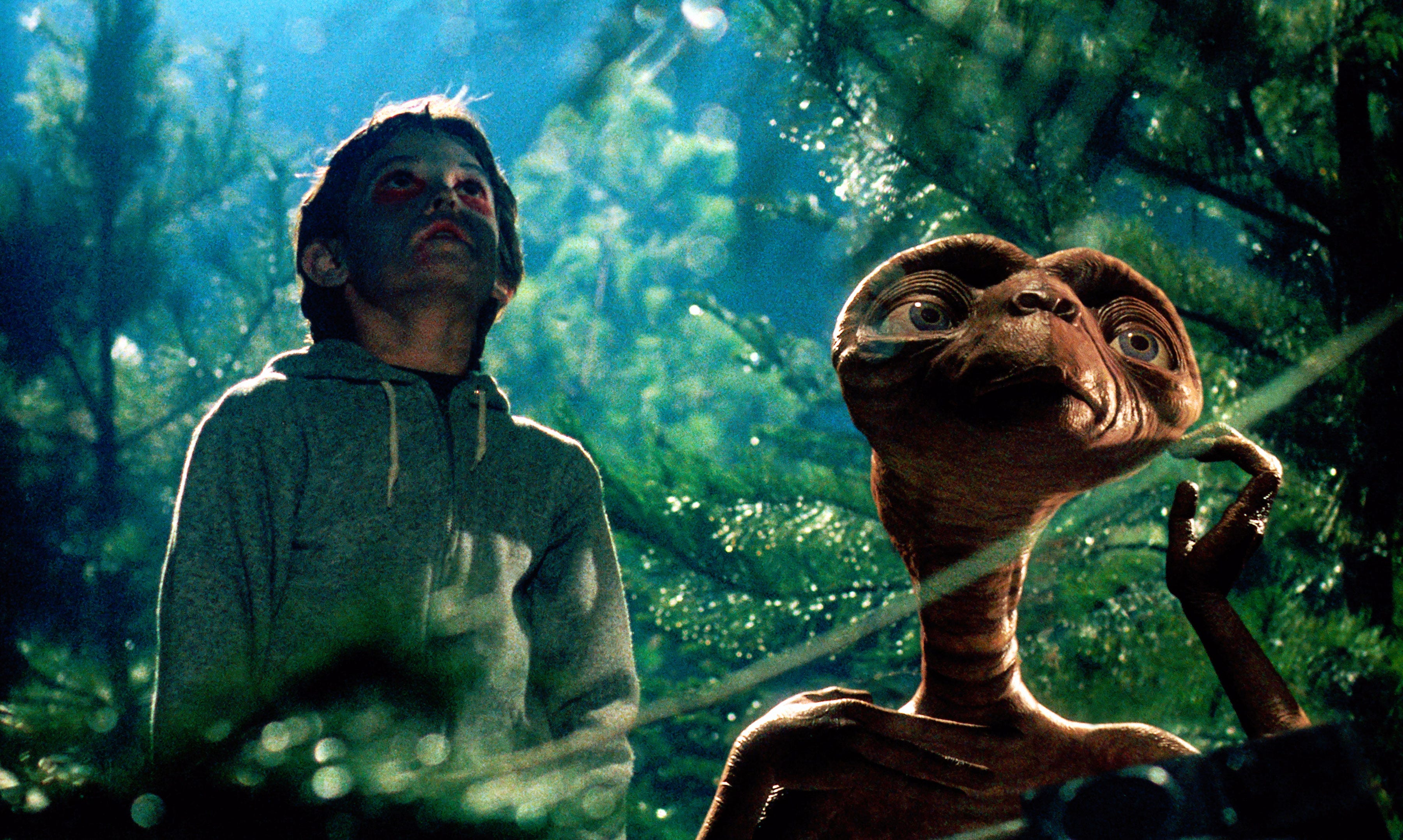
That’s probably why Steven Spielberg’s E.T. has stayed with me for so many years. This time, what struck me wasn’t the alien. It was who reached him first. It wasn’t the scientists. It wasn’t the military. It wasn’t the adults with all their technology, instruments, and protocols. It was a child. Elliott never begins by asking whether E.T. is dangerous. His first instinct is curiosity. He asks, “Who are you?” He sees someone who is lost before he sees someone who is different. The adults, on the other hand, do what adults often do. They analyse, classify, and contain what they don’t understand. Somewhere along the journey of growing up, curiosity quietly gives way to control. Perhaps Spielberg was gently suggesting that curiosity isn’t childish at all. It may well be the purest form of intelligence we possess.
I don’t remember ever looking at the night sky as a child and wondering whether the stars were dangerous. I only remember wondering what lay beyond them. Summer vacations often ended with us lying on terraces, trying to count stars before giving up because there were simply too many. As a child, I was awestruck by TV shows like Star Trek, which invented stories about interplanetary travel, imagined worlds we would never visit, but it always made me wonder if someone, somewhere, might be looking back for us, too. Children have a remarkable relationship with uncertainty. They don’t see not knowing as a problem to be solved. They see it as an invitation to ask another question. Somewhere between growing up and growing older, that relationship changes. We slowly begin to confuse certainty with intelligence, as though admitting “I don’t know” is a sign of weakness rather than the beginning of understanding.
Of course, evolution has a perfectly good explanation for this. For thousands of years, assuming the worst kept us alive. If the bushes rustled, it was safer to imagine a predator than the wind. Our ancestors survived because they were cautious. Fear wasn’t a flaw; it was a survival strategy. Evolution optimised us to stay alive, not necessarily to understand everything around us. The world we live in today, however, asks something more of us. It asks us not just to rely on instinct, but to question it.
I see the opposite instinct every time I spend time with my nephew, Ayan.
His curiosity isn’t satisfied with the first answer. He uses it as a stepping stone to the next question. He’ll ask why something happens, then why that answer is true, and then why that happens. If my explanation doesn’t satisfy him, he’ll observe, experiment, ask someone else, or come back to the same question another day. There is no embarrassment in not knowing. There is only excitement in finding out.
Sometimes I catch myself answering him too quickly, eager to move the conversation along. Adults are busy. We mistake efficiency for wisdom. Children have no such urgency. They’ll happily spend twenty minutes trying to understand something that most of us stopped noticing years ago. They’re not collecting facts. They’re building a way of looking at the world
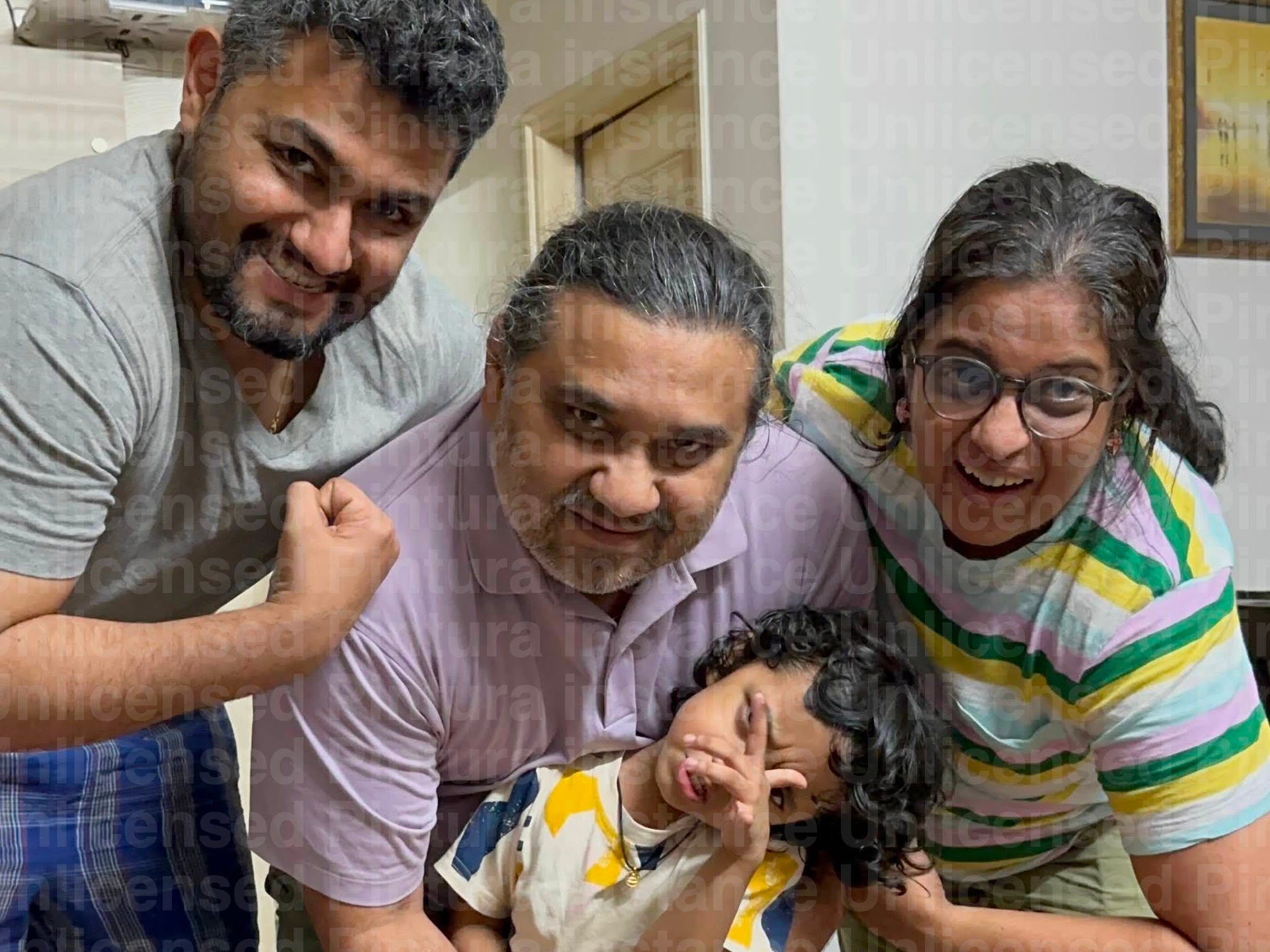
.Watching Ayan has made me realise that children don’t carry the burden adults often do, the burden of appearing knowledgeable. They are perfectly comfortable saying, “I don’t know.” In fact, that’s where all their adventures begin.
Perhaps that’s why my brother’s question kept growing in my head. It stopped being about aliens. It became about everything unfamiliar. New ideas. New technologies. Different cultures. Different generations. Remarkably, we sometimes struggle to understand our own children, or our parents, despite sharing a home and a lifetime. We call it the generation gap, but perhaps it’s simply the curiosity gap. Somewhere along the way, we stopped asking each other enough questions.
And yet, something extraordinary happens whenever humanity faces a shared calamity. An earthquake doesn’t recognise borders. A pandemic doesn’t distinguish between religions. A flood doesn’t care which generation you belong to. In those moments, the labels we’ve carefully built begin to dissolve, and we remember something much older than nationality, politics, or identity. We remember that we’re simply human.
Fear has an extraordinary ability to unite us. Shared suffering reminds us that we are all connected.
I wonder if curiosity could do the same.
We know so little about the universe. We’ve barely explored our own oceans. We still don’t fully understand consciousness. Most of the cosmos appears to be made up of things we can’t yet explain. Every scientific breakthrough answers one question only to reveal ten more waiting behind it. For a species with so many unanswered questions, we can be remarkably certain.
Science has never progressed because someone declared, “I already know.”
Every meaningful discovery I can think of began with someone quietly admitting,
“I don’t know.”
Those words are not an admission of ignorance. They’re an invitation. To observe a little longer. To ask another question. To listen before concluding. To change our minds when new evidence appears. There is a quiet confidence in that. Intelligence isn’t measured by how many answers we have. Maybe it’s measured by how comfortable we are saying, “I don’t know.”
If we ever do encounter another civilisation, I hope our first instinct isn’t to ask how we defend ourselves. I hope we ask the same question Elliott asked.
“Who are you?”
Perhaps that’s the question we should ask more often. Not just of aliens, should we ever meet them, but of people who think differently from us, of children whose worlds we no longer fully understand, of cultures we’ve never experienced, of technologies we instinctively fear, and of ideas that make us uncomfortable. Life may never introduce us to an alien civilisation, but it introduces us to something unfamiliar almost every day. Perhaps the greatest sign of intelligence isn’t how quickly we defend ourselves from the unknown. Perhaps it’s having the humility to admit that we don’t know enough yet, and the curiosity to stay with that uncertainty just a little longer, until fear quietly gives way to understanding.