


We have a WhatsApp group of girlfriends where conversations meander effortlessly between the profound and the completely ridiculous. A few days ago, Gayatri asked a question.
“Do you use space organisers in your bag?”
It was one of those perfectly Baizone questions that should have ended with a yes or a no. Instead, it stayed with me. Somewhere between finishing that conversation and making myself a cup of chai, I found myself opening my bag, looking inside it, and wondering why everything was where it was.
The funny thing is, I don’t really use space organisers. At least not the ones that are sold as space organisers. In fact, before I thought about what was inside my bag, I realised I’d spent just as much time choosing the bag itself.
Living in Mumbai does that to you.
Every monsoon reminds you that beauty and practicality don’t always travel together. I’ve admired beautiful handbags for years, but I’ve also watched one unexpected downpour turn them into a source of anxiety. Wet electronics. Damp stationery. Makeup floating around the bottom of a bag. Somewhere along the way, I stopped choosing bags for how they looked and started choosing them for the life they had to survive.
So when Instagram eventually showed me a waterproof tote, I didn’t think very hard. It wasn’t the prettiest bag I’d owned. It was the most honest. It was designed for Mumbai. A few days later, it dawned on me that I'd chosen it for exactly the same reason I'd organised everything else in my life.
Around use.
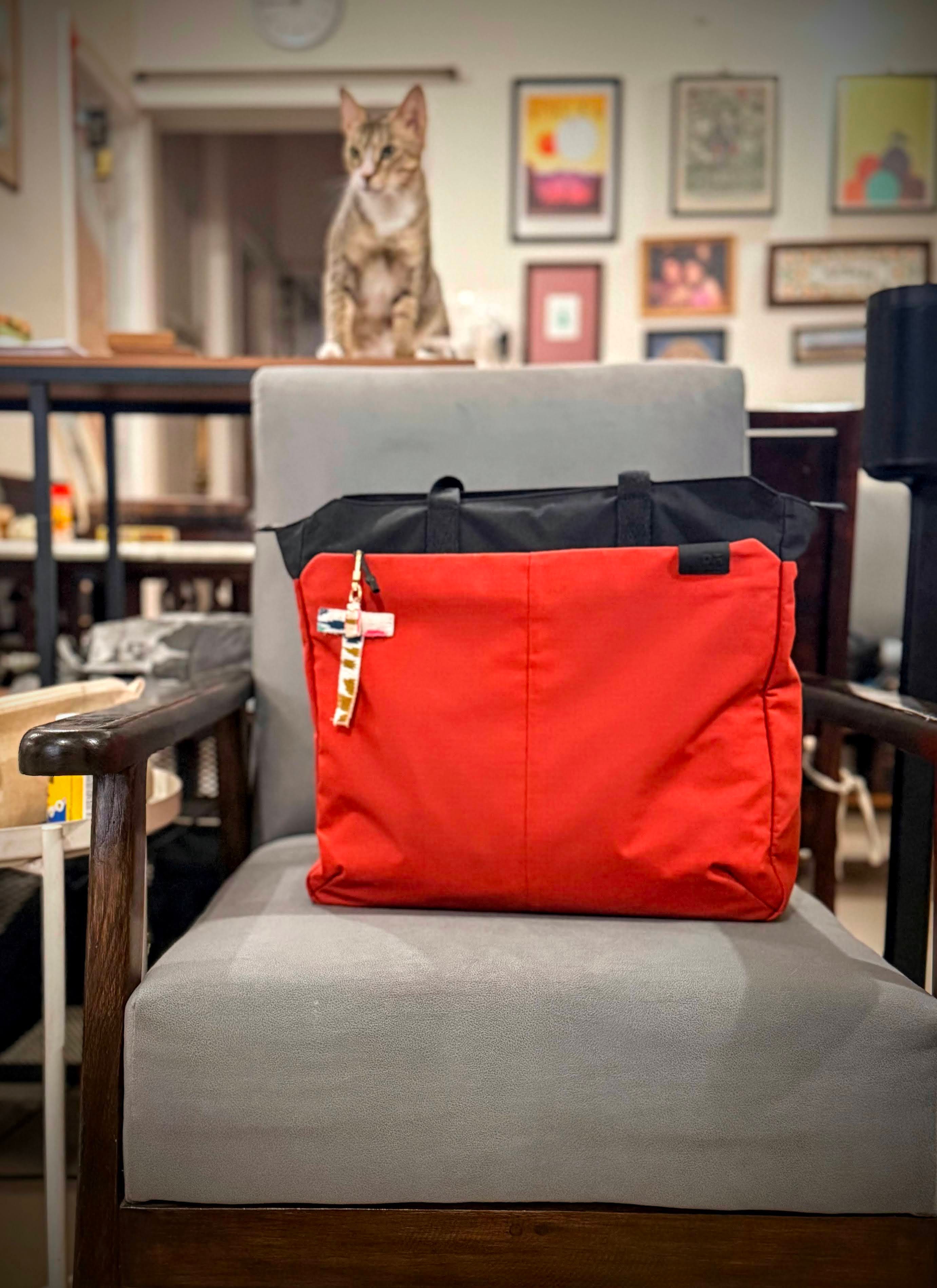
Over the years, I’d quietly built my own system. A makeup pouch that Aamir got for me from Amsterdam. A stationery pouch from my Teach For India days. A little medicine pouch that has travelled with me long enough to have earned permanent residency. My AirPods, tucked safely inside the little case that says Trupz, a thoughtful gift from Atheena.
None of these belong together. None of them were ever meant to become a system. The more I looked at my bag, the more I realised that I hadn’t organised it around objects. I’d organised it around use. I need to know where my charger and power bank are, then my lipstick, because I reach for those more often. My diary has its own place because I don’t want its pages folding into themselves.
I loved the bag because it allowed me to compartmentalise.
I feel like it’s a word that rarely gets used kindly anymore. These days, I always hear it in the context of emotions, usually as criticism. As though compartmentalising means pushing feelings away or pretending they don’t exist.
But that wasn’t what the word originally meant. It simply meant dividing something into meaningful parts. Not separating something from the whole. Not denying its existence. Just giving every part its own place while letting it remain part of the same whole.
I realised it’s simply a way of making room within what you’re already carrying. Once that thought arrived, I couldn’t stop seeing it elsewhere. My wardrobe is probably the most organised space in my home. Not because I particularly enjoy folding clothes, but because I use it every single day. Years of ordinary mornings have quietly taught me where everything belongs. The system wasn’t designed one Sunday afternoon. It emerged over years of ordinary mornings because I'd learnt that every decision I didn't have to make before 8 a.m. was one I could spend somewhere else
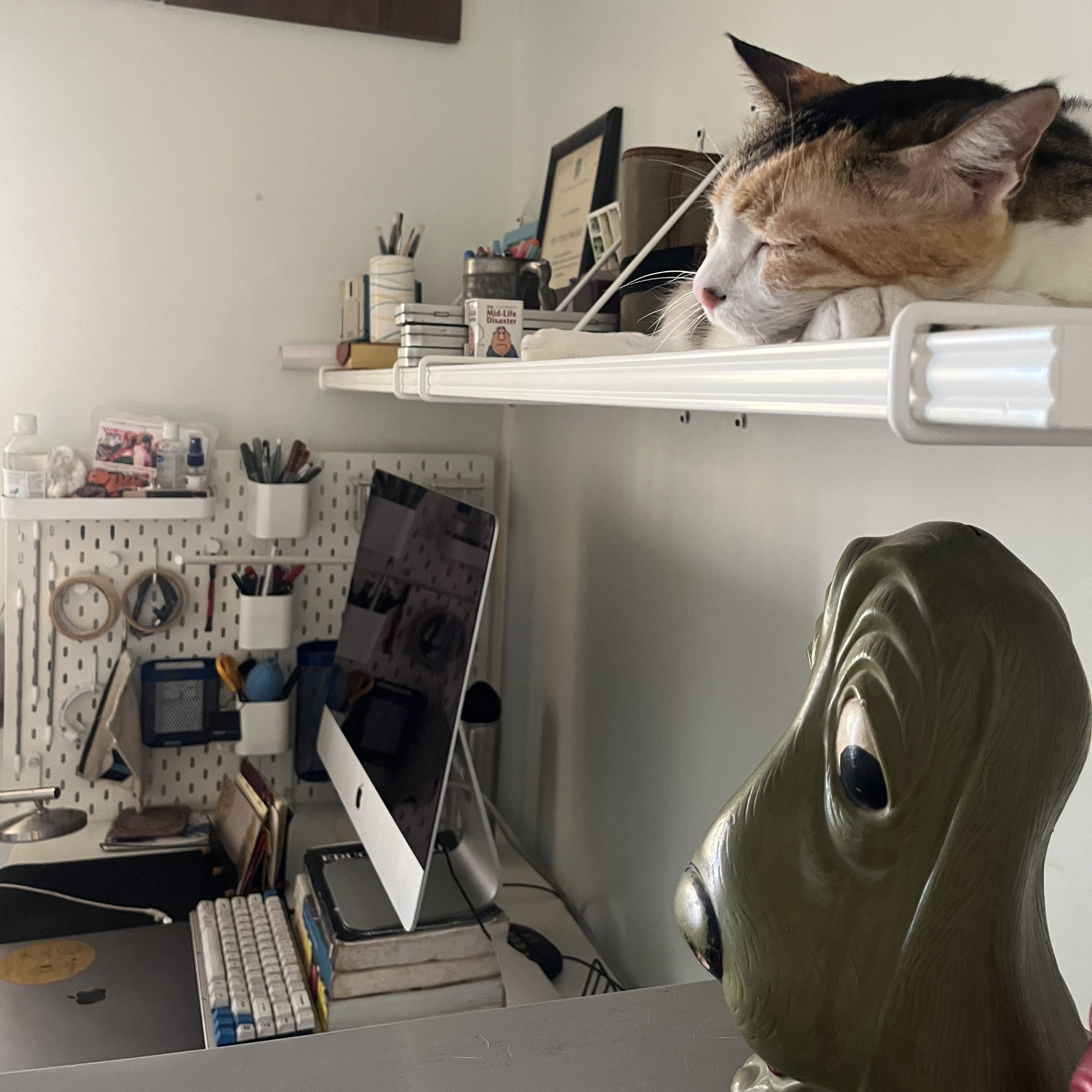
My work desk at home tells a different story. It’s organised enough, but never immaculate. For the longest time, I thought that reflected poorly on me. Then it occurred to me that perhaps it simply reflects my life. I don’t work from home very often. My desk isn’t untidy because I’m careless. It’s honest.
Then there’s the medicine pouch. If I’m being completely truthful, some of the medicines inside have probably expired. I should replace them, and I will. But there’s something oddly comforting about that little pouch. It has travelled faithfully with me for years, prepared for emergencies that, thankfully, never arrived.
My kitchen makes me smile for an entirely different reason. It’s beautifully organised, but almost none of the credit belongs to me. My house help has developed a system that makes perfect sense to her. Every spice has a home. Every utensil knows exactly where it belongs. The only person who gets completely lost in that kitchen is the one trying to cook. Whenever I decide to make something, the first ingredient I need is almost always the one I can’t find.
Somewhere along the way, I realised that every organised space quietly reveals something about the life being lived inside it. The life we keep returning to.
The things we reach for most often move closer. The things we rarely use drift further away. Over time, our spaces stop reflecting our intentions and begin reflecting our habits. And perhaps we do the same thing with ourselves.
Just as I built my bag around what I carry, perhaps each of us slowly builds our inner compartments around what life has asked us to carry. No two minds are compartmentalised alike because no two lives are. We don’t all carry the same things. So why would we carry them in the same way?
None of these systems is right. None is wrong. They’re simply personal.
That’s where we’ve misunderstood compartmentalising. It isn’t about locking emotions away. It’s about making room.
Making room for work without allowing it to occupy every corner of your day.
Making room for ambition without squeezing out contentment.
Making room for grief without asking joy to leave.
Making room for uncertainty without evicting curiosity.
Of course, despite our best efforts, things spill over.
They do in my bag.
My kajal stick ends up mysteriously migrating into the stationery pouch, and there’s always loose stuff floating around, yet to find its permanent pouch.
Life behaves much the same way. Ever so often, when I drive to work, a song triggers thoughts of Aai. I may be all dressed up for a big corporate meeting, and my heart has gone mushy. The meeting still happens. I just arrive carrying something extra.
Compartmentalising was never meant to stop the spill. It simply helps us know where things belong when it’s time to put them back. Every morning, before I leave the house, I pick up my bag.
I rarely think about the little system I’ve built over the years. Every pouch has quietly found its place. The pen and diary are still there. The medicine pouch continues travelling hopefully. Everything I think I might need has been given the space it deserves. I don’t know what the day will bring. The bag isn’t organised for certainty.
It’s organised for possibility.
I am sure by evening, something will almost certainly have shifted. Coins in the wrong pouch. A pen that wandered. Something will have spilled into a place it wasn’t meant to be. Tomorrow morning, before I step out again, I’ll quietly put it back where it belongs.
Do I use space organisers? Not really. I suppose I just keep making room.