


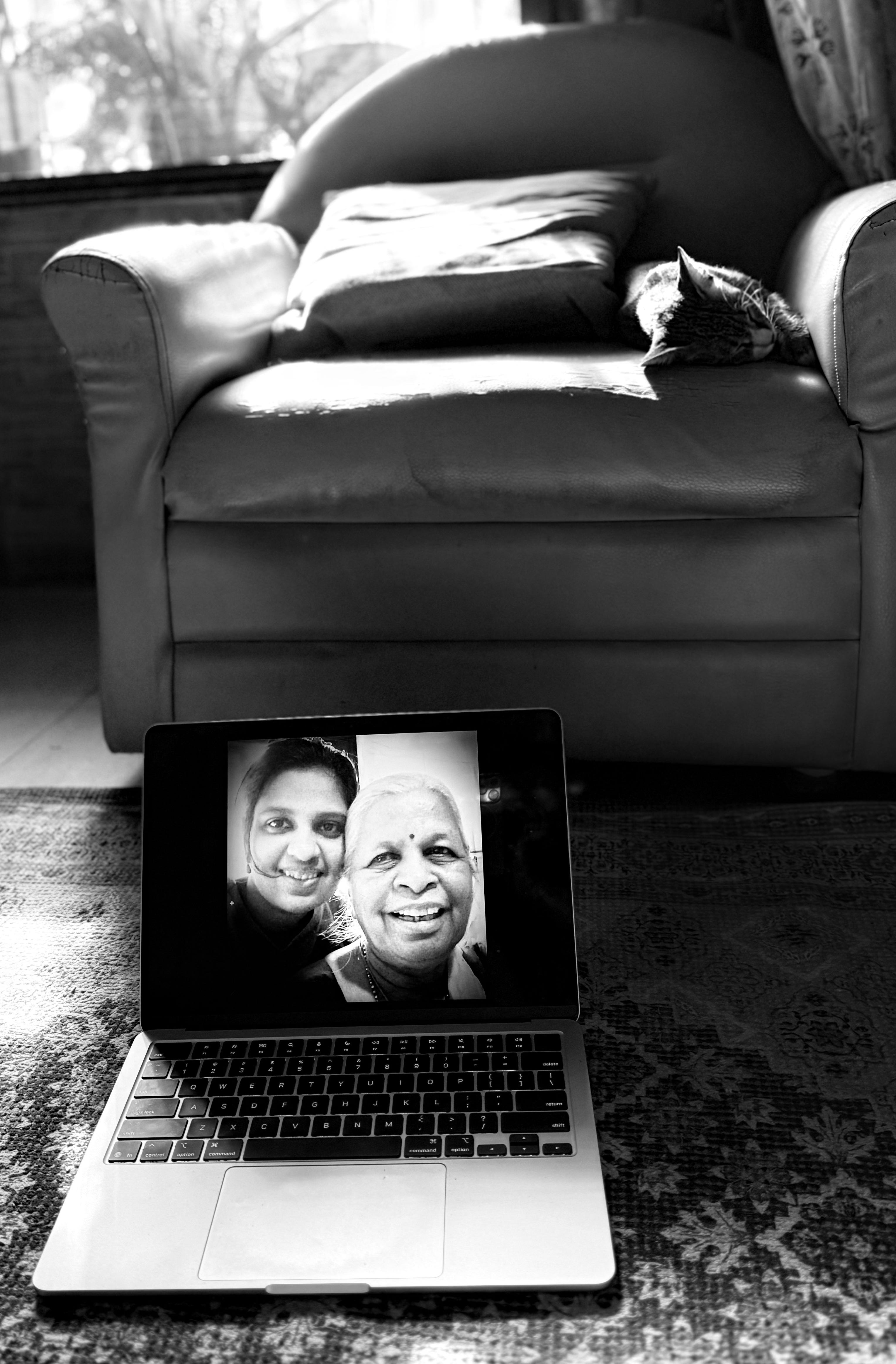
On weekends, I like watching old Hindi movies. Since Aai passed, this has become a quiet way of feeling connected to her. It reminds me of good times with her. When the same roads I once walked with Aai and Baba appear in an old film, a waterfall of memories begins to flow, drenching me in moments where I perhaps felt the most honest love from my parents. Core memories unlock softly.
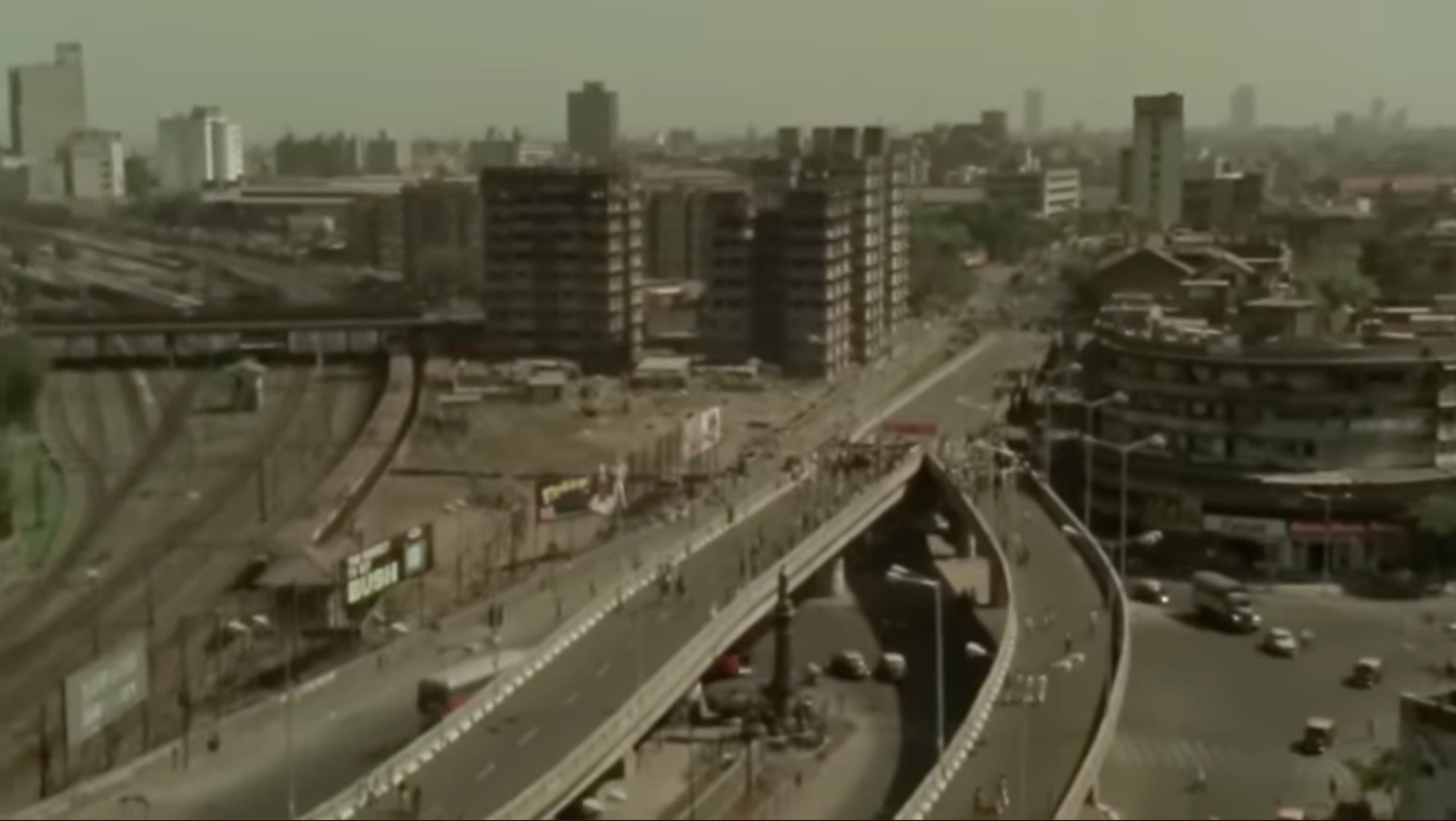
It is February 7, 2026. I am watching Jaane Bhi Do Yaaro. The D’Mello Bridge in the film that stands at Clare Road junction has collapsed. Watching the movie is special. It takes me down memory lane to old Mumbai, and suddenly I saw myself walking with my mother to school. I went to school on Clare Road. Every year, we bought my school shoes from the Bata and Corona shops under that bridge. A part of me still stays back in that shop, coaxing my mother to buy the pink lace shoes.
And yet, I am pulled into a present-day conversation. We are already discussing plans for March 15. As if it isn’t surprising enough that it is February 2026, I find myself holding such concrete certainty about a future date, almost as if life can be predicted just by looking at my calendar. In a city like Mumbai, with its relentless pace, my work calendar and social calendar seem to be at war, each trying to prove which one is more overwhelming.
The fact that I am living in my present while already knowing what is in store at least forty-five days ahead begins to bother me. Just a day earlier, a work outing was announced for mid-March. On the same weekend, my former organisation invited its alumni for an event in Pune. Both are good things, yet the clash of dates slowly grows inside my head. I know I will have to make a difficult choice.
Knowing things in advance is not always bad. In a fast-moving world like ours, where families and friends are now global citizens, planning ensures that meetings happen with intention, not by chance. Yet I find myself uneasy with another phrase—taking out time; as if time were a physical object stored somewhere outside us.
It pulls me back to a different past, when a ringing phone carried complete mystery. You never knew who was calling or what news waited on the other side. I think again of Aai, who never used a smartphone and remembered important numbers by heart. I remember how her face lit up when someone called after a long time her laughter, that brief pause from the present. Those were happy years. Unpredictable years. Years full of small surprises, whether in travel or in life.
Watching the film, I realise that my restlessness is not really about clashing dates or missed events. It is about something quieter. About how differently time once moved. About how lightly the future sat on our shoulders then, and how heavily it sits now.
Somewhere between memory and planning, a question begins to form not just about the city, but about the way we live inside time itself.
What does it really mean to live in the future?
For many of us, it begins innocently. Planning feels responsible. Certainty feels comforting. A date on the calendar gives shape to days that might otherwise fall apart. In Mumbai’s restless rhythm, looking ahead feels like survival. We book joy the way we book travel. Even rest needs appointments.
Somewhere along the way, preparation quietly becomes pressure. Tomorrow stops being a direction and starts becoming a landmark. The future no longer waits at the horizon; it is asking to sit inside today, asking to be managed and controlled. I catch myself always arriving mentally before I arrive in person. Playing out situations, conversations in my head, long before they’re scheduled. In doing so, something small but sacred begins to thin out, the ability to be where we already are with our full body and mind.
Surprise that once felt like warmth is now ian nconvenience. Uncertainty once carried softness, not stress. We have started postponing the present, saving our attention for a better tomorrow that never fully arrives but certainly becomes a past we don’t recognise.
Vacations become the interest we pay to recover the lost time. We travel far just to meet a slower version of time, a place where mornings are determined not by alarms but the angle of light that falls on the ground, where afternoons stretch without apology, where doing nothing carries no guilt. For a few brief days, urgency loosens its grip.
I am amazed at how this softness lives more permanently in villages and small towns, in evenings that arrive gently, in tea poured without looking at the clock,
in lives measured by presence rather than productivity.
There, the future is not chased. It unfolds. Chance still has an opportunity. Perhaps sustainability is not only about land or resources. Perhaps it is also about the speed at which a heart can continue to feel without risking a burnout, physical and emotional.
So how do we hold the future without losing the present? It is simply by paying attention.
Taste the tea before it cools.
Finish a conversation without reaching for the phone.
Some days are ordinary, boring, and that is perfectly acceptable.
To trust that uncertainty is sometimes a space where life can still surprise.
When I think of Aai, this is what returns most strongly.
Not advice. Not instruction. Just a way of living inside time that did not feel hurried.
Even simple days felt complete.
Listen! There I go, typing listen as if time itself might pause to hear me.
Later that night, after the film ended and the house returned to silence, I opened my calendar again. March 15th was still there. So were the choices waiting around it. And in that small, ordinary moment:
Tomorrow had not been waiting for me at the horizon.
It had already crept into my present. I also feel something quieter than adjustment.
A small refusal to let the present disappear unnoticed.
One year from now, this present will already be a memory.
Maybe living well is nothing more complicated than this: to notice when tomorrow enters today, and still choose, gently, to remain. That is where the future you want truly begins.
Trupz, I genuinely don’t know how you do this. How do you write something that feels so soothing and yet so quietly soul-crushing at the same time?
Reading this, I felt exposed in the gentlest way. Like you held up a mirror I didn’t realize I’d been avoiding. I thought I was getting ready for tomorrow. But your words made me realize I’ve been surrendering pieces of my today in the process. Thank you for writing something this honest❤️